|
|

Les "Bone"
Herring,
the man behind Force Recon webpage has passed
away
due to lung cancer on the 7th of July
2011.
We will greatly miss him,
Les, may you rest in peace.
Our
warrior brother has passed on. His spirit
lives in all of us who have been inspired by
knowing one of the greatest Marines to wear
the uniform. From training exercises to actual
combat missions Les was at the forefront of
all the action possible by a Force Recon
Marine. One hell of an Airborne, SCUBA Diving,
Pathfinder, Ranger who together with our
Special Forces warrior brothers we had the
honor and privilege of working side by
side with at the A-Camps in Vietnam.
Ray Rossi, 1st Force Recon, Vietnam
|
1st. Force Reconnaissance Co.
RVN 1964-1965
|
Their primary
missions were to conduct
pre-assault reconnaissance for
amphibious landing forces, this
included conducting hydro graphic
surveys of
proposed landing sites and
including hinterland recon to
determine ability
of egress from the beach head
inland for troops and equipment.
The other
primary mission was to conduct
deep reconnaissance into hostile
territory
and report on enemy locations,
routes of communication,
strength, equipment,
etc.
Their secondary
missions included direct action
activities such as combat
patrols,
search and destroy, demolition
and operations with other units.
The 1st Force
Reconnaissance Company at Camp Delmar,
and Camp Pendleton California and
consisted of 6 reconnaissance
platoons.
One platoon every 13 months was rotated
to Okinawa
to support the 3rd Marine
Division and
to provide pre-assault beach
reconnaissance and post assault
deep recon
missions.
A Force
Recon Platoons consisted of 16
Marines,
1 officer,
1 senior NCO,
1 parachute rigger,
1 dive NCO,
3 reconnaissance teams of
4 Marines each
Cpl Les Herring was a Team
leader with Sub Unit
1, 1st. Force Reconnaissance
Co,
back in the mid 60's.
My
platoon, Sub Unit 1 arrived in Okinawa in November
1964 and conducted training
operations until December 1964
when we boarded a
small destroyer specifically
designed to carry Marine Recon and Navy UDT/SEAL
teams to areas of operation.
After spending Christmas day in Subic Bay,
in the Philippines we sailed to
southern Thailand to conduct recon patrols.
Each of
our 4 man teams had 1 Thai
Marine attached as interpreter. After completing
those operations we arrived in
Vietnam and began conducting operations for
the planned Marine amphibious
landings that would beginning in March 1965.
We began attachments to SF
A-Teams in May 1965 and
conducted recon and combat
patrols in the I Corps. We operated
mainly from Da Nang,
Phu Bai, Chu Lai, Gia Vuc and
Kham Duc
May 1965: Sub Unit 1
platoon attached to Gia Vuc
|
PHOTOS TAKEN
DURING ONE
OF THE A-113
& FORCE
RECON COMBINE
PATROL SOUTH
WEST OF GIA VUC
SUMMER
1965
|
|
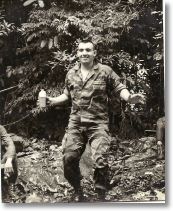
Sgt
Herman P. (Val)
Vialpando
|
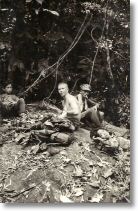
Cpl L.R.
"Bone" Herring
|
|
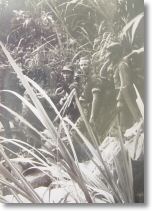
|
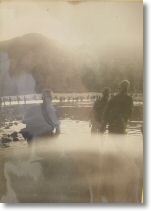
Myself on the left and
Dave
Klehn
A-113, crossing the Song Re
and heading back into Gia Vuc
after a patrol southwest of the camp
|
|
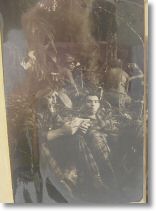
SFC Bob Gifford with the
cigarette and
Sgt. H P Vialpando,
|
"Val was an
outstanding
Marine, Ranger
qualified as I
was, also, a
good friend, a
real
professional.
Val was also
a sport
parachutist
enthusiast and
he was killed on
a jump in 1975
due to a
malfunction."
Les Herring
(Force Recon)
The
two top photos
are thanks
to Dave
Klehn (A-113) ,
the other photos
thanks to Les
Herring (Force
Recon).
They may have
been taken
during the same
patrol?
|
November 1965: 2nd platoon attached to A-106 at Ba To.
A combine patrol from Ba
To was attacked on the night of
the 16 December, with catastrophic
result, three Marines a
SF Sgt and 10 CIDG were killed.
The three Marines were
Cpl. R.S. Joy, Moore and
R. Sisson. The aftermath was
recorded in the I
CTZ MOBILE STRIKE FORCE -
MOPSUMS DECEMBER 1965
"The
third Nung Company conducted
refresher training from 1
through
15 December and was committed on
a reaction mission at Camp Bato
on 16 December. At
0430 17 December the company
departed Camp Bato to retrieve
the bodies of American and CIDG
dead located approximately 6
kilometers east of Camp Bato.
This operation was aborted
just
short of the objective area on
the basis of new intelligence on
the situation in the objective
area.
On 21 December 2 Nung platoons
reinforced with elements of the
weapons platoon acted as
security for the force of CIDG,
USSF and USMC personnel in to
the objective area and secured
the
area while the combined force
retrieved the bodies of CIDG and
US personnel. The Nung
Force then acted as security for
the combined force and returned
it to Camp Bato." courtesy
of Steve Sherman from
Radix Press, After Action
reports are available for the I,
II, III, IV Mike Force,
use link
December 1965: 3rd platoon
attached to A-107 at Tra Bong
The rest of the Force Recon
Company (5 platoons) arrived in
RVN in June '65.
|
|
Our first unit KIA was on
the 23rd of April 1965
when seven of us were ambushed
while landing for a recon
patrol at a small beach at the
confluence of the Son Bon Tran
river in South
Vietnam, Cpl L.H. Merrell was killed
as well two sailors from our
escort boat.
The rest of the Force Recon
Company (5 platoons) arrived in
RVN in June '65.
Additional
information on the 23rd April
1965 ambush, thanks to Jim
Baker, former USN TM2
The two sailors killed were:
Richard Henry
Langford, EN2 USS Bexar
TAD to USS Cook APD 130
William Ralph
Fuhrman, TM3, USS Cook APD 130
Bill Fuhrman was the
gunner on your boat, was
credited with saving Marines
lives and lost his.
Petty Officer Fuhrman received
the Silver Star for his
actions in extracting this
patrol and deserves to be
mentioned by name.
Engineman 2nd Class
was keeping the boat
running and returning fire and
deserves to be mentioned by
name.
Bellow
is an extract from I
CTZ MOBILE STRIKE FORCE -
MOPSUMS MAY 1965
"Twenty-five
Marines of the 3rd Marine
Division Force
Reconnaissance have been
assigned to
"A"
detachments in I CTZ for
specific operations as
observers."
courtesy
of Steve Sherman from
Radix Press, After Action
reports are available for the I,
II, III, IV Mike Force,
use link

Force Recon at
Gia Vuc see Commo Bunker display 2007

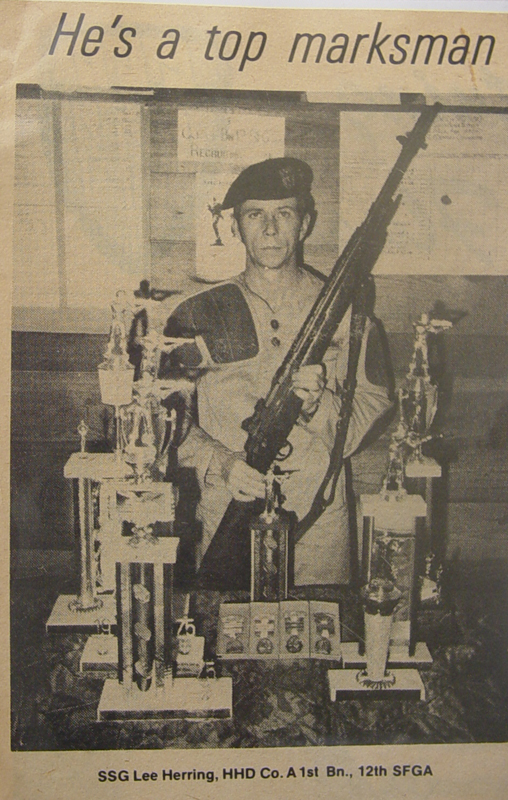
Les Herring,
photo taken at a high power rifle match while serving with the 12th SFGA
|
Force Recon News
|
|
FRA 2008 photo report by Les Herring
|
|
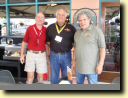
1stSgt.(ret) Dean
Riggs, Mike Brown, Ray
Rossi
|
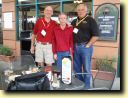
Dean Riggs, Les Herring, Mike Brown
|
|
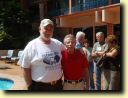
1stSgt.(ret) Pat
Teague, Les Herring
|
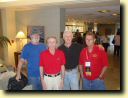
Dennis Taylor , Les Herring,
JJ Brown,
SgtMaj.(ret) Tom
Bachta
|
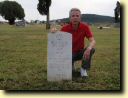
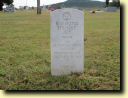
Raymond Stanley Joy, Jr
1ST FORCE RECON CO, HQ BN, 3RD MARDIV
United States Marine Corps
19
October 1942 - 16 December 1965
Abernathy, Texas
Panel 04E Line 018
Link to the virtualwall
"These are photos I took in September of Stan Joy's grave site.
He is one of the 3 Marines KIA on patrol from BaTo. I attended his
funeral in late December '65 when I returned from RVN. They were killed the day
I left. I never did know where he was buried as they did not bury him at the
time of the funeral.
After much searching on
internet, phone calls, etc.
Les Herring
|
|
|
|
Letter
received on the 29th
of January 2009
just
watched the"
trailer' from the
HBO special,
"Taking
Chance". It reminded
me, that often,
those who lose their
lives on the field
of battle are all to
often just numbers,
not people, people
who had real lives,
family, friends,
wives, sweethearts,
fathers, husbands,
etc.
During
my tour in Vietnam,
February-December
1965, only four
Force Recon Marines
were KIA, Cpl.
Lowell H. Merrell,
Cpl. R. S. Joy,
Cpl.Sisson, Cpl.
Moore. Later, forty
more would be killed
in action.
I
attended the
funerals of Cpl.
Raymond
Stanley"Stan"
Joy in December 1965
and S/Sgt. Nevitt D.
"BuddyBuddy"
Davis in September
1967.
So
now, it is 42 years
since my last
attended funeral,
but the loss of
Stan, Nevitt, and
others still haunt
me, still cause me
pain, still evoke
tears because I miss
them, their love of
living life each
day, daring to tempt
death in training as
well as combat. Men
who loved life, the
excitement, the
possibilities. They
smiled, they
laughed, they
groaned, they
sweated, they hurt,
but always finished
the day with heads
held high, chest
out, standing
tall.Men ready and
willing to answer
any call of their
country, Men who
loved America,
totally devoted,
totally loyal,
totally patriotic.
Indeed, we should
and we do thank God
for such men.
Let
us, who live on, let
us celebrate their
lives every day. Let
us carry on in a
manner they would
wish. Let us also
apply our thanks,
our gratitude, our
respect, our love
for those who have
fought and died
since Vietnam, in
Granada, Panama,
Iraq, Afghanistan,
and the myriad of
other far off lands
where Americans are
serving our great
Republic.
None
of those gave their
life for their
country, instead, they
fought for their
life to their last
breath carrying out
their assigned
mission and leading
or attempting to
protect their fellow
Marines.
Marines
do not die for their
country, they make
enemies die for
their country.
Marines fight for
their country but
first and
foremost,
their fellow
Marines.
So, I
raise a glass and
toast all I have
mentioned and those
who will follow. God
bless you, Semper
Fidelis, Frater
Infinitas.
Les
"Bone"
Herring
|
All information and
photos thanks to Les Herring ,
Cpl, 1st. Force Reconnaissance Co.
RVN 1965
SSGT, Co. A 1st Bn. 12th , SFGA
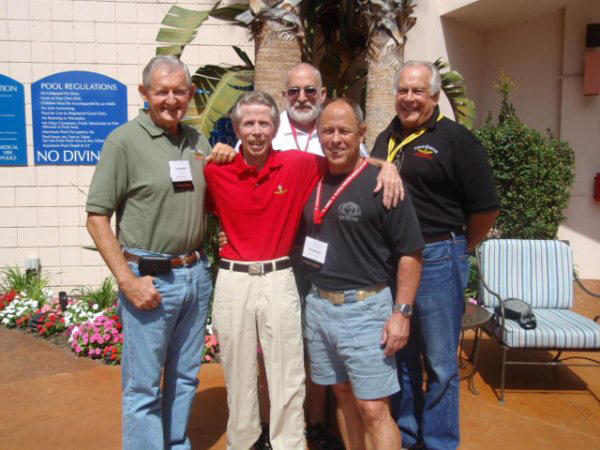
Front row,
from Left
Tom Campbell on left, Les
Herring, Phil Bradfield
|
|
|